


Hi, I'm Katie
Sharing my functional healthcare expertise as someone who’s worked in both sides (western & holistic). I know when to lean into which side when the other side lacks.
WANT to WORK TOGETHER?
right this way
Low Akkermansia After Toxic Mold Exposure: Why the Gut Mucus Layer May Matter for a Healthy Weight, A1c & Mold Recovery
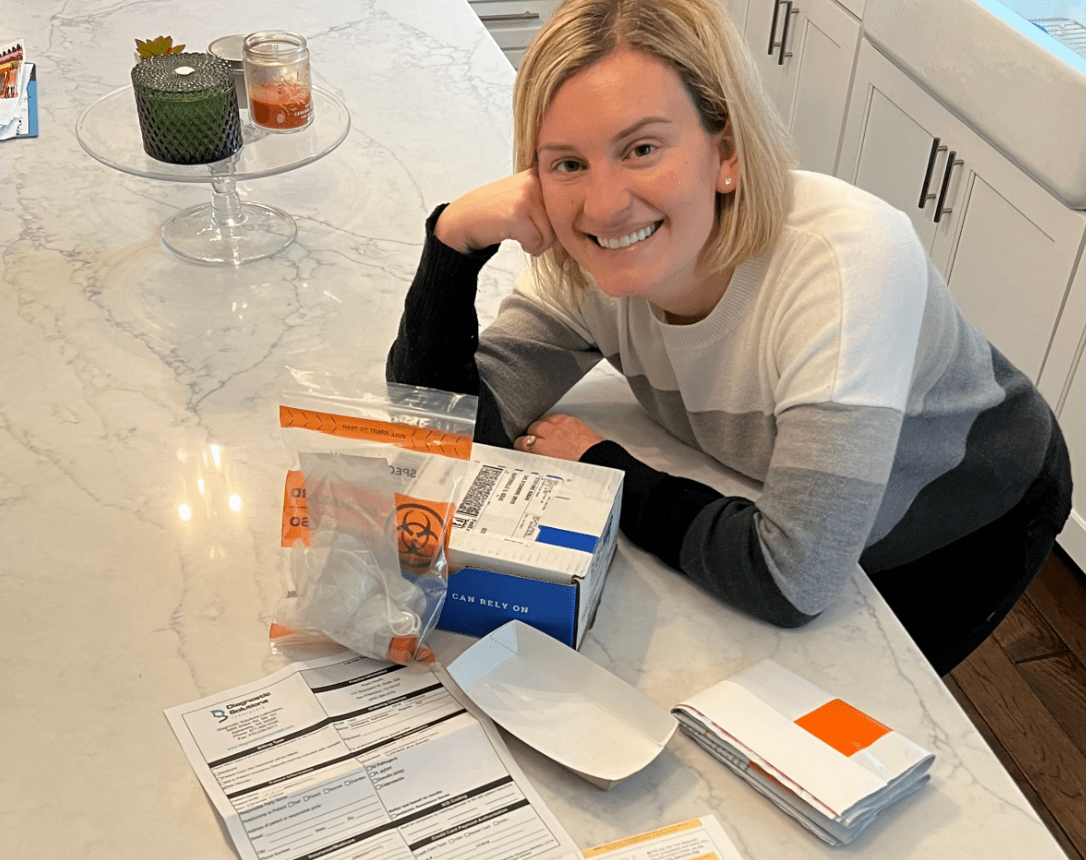
One pattern I see frequently when looking at GI-MAP testing in people who have experienced significant toxic indoor mold exposure is low Akkermansia muciniphila.
This is an interesting finding because Akkermansia is not just another bacterium on a stool test. It is one of the most fascinating organisms in the human microbiome because it lives closely within the intestinal mucus layer and has a unique relationship with mucin, the glycoprotein that makes up much of that protective mucus barrier.
When I see low Akkermansia in someone with a history of environmental exposure, digestive dysfunction, metabolic changes, or impaired gut-barrier function, I think about the bigger ecosystem rather than simply asking, “How do we get the number higher?”
The goal is to rebuild the environment that allows Akkermansia and other beneficial organisms to thrive – attached is a sample protocol but individualization is best.
Akkermansia and the gut’s mucus layer
Akkermansia muciniphila is a specialized mucin-utilizing bacterium. It uses mucin as a source of nutrients and produces metabolites, including short-chain fatty acids, that can participate in microbial cross-feeding. Importantly, its relationship with the mucus layer is more complicated than simply saying that Akkermansia “eats mucus.”
Research suggests that Akkermansia can actually stimulate mucus production, increase mucus thickness, strengthen intestinal barrier function, and interact with intestinal epithelial cells.
This creates an interesting feedback loop:
Mucin provides a habitat and food source for Akkermansia → Akkermansia metabolizes mucin → microbial metabolites support the surrounding ecosystem → the host can respond by maintaining and renewing the mucus barrier.
That is one reason I don’t think of Akkermansia as merely a “probiotic.” It is part of the mucosal ecosystem.
At the same time, the relationship is highly dependent on context. A 2025 review highlighted an important nuance: excessive mucin degradation under conditions such as inadequate dietary fiber or an altered microbial ecosystem could potentially compromise the mucus barrier. In other words, we don’t simply want “as much Akkermansia as possible.” We want a healthy microbial ecosystem with adequate substrate and mucosal support.
What does toxic mold exposure have to do with this?
This is where I think we need to be careful with the science.
There is growing evidence that mycotoxins can interact with the gut microbiome, affecting microbial composition, intestinal epithelial cells, inflammation, and gut-barrier function. Animal and experimental studies show that mycotoxin exposure can alter the microbiome and contribute to intestinal dysfunction.
However, there is not yet strong human evidence demonstrating that indoor mold exposure directly causes a persistent reduction in Akkermansia.
So rather than saying:
“Mold exposure causes low Akkermansia.”
I think the more scientifically responsible way to describe the pattern is:
“In some people with a history of significant environmental exposure and gastrointestinal dysfunction, low Akkermansia may be one component of the broader dysbiotic and mucosal pattern that develops after the exposure.”
That distinction matters.
A GI-MAP can provide useful information about the presence or quantity of specific microbial targets, but stool microbiome testing is still an evolving field. An international expert consensus has emphasized that the clinical utility and interpretation of commercial microbiome testing remain incompletely established.
So I view a low Akkermansia result as one piece of the puzzle—not a diagnosis by itself.
Why might low Akkermansia matter for metabolism?
This is where the research gets especially interesting.
Akkermansia has repeatedly been associated with metabolic health. Lower abundance has been observed in association with obesity, diabetes, insulin resistance, and other metabolic abnormalities.
In animal research, restoring Akkermansia has produced some remarkable findings.
One landmark study found that Akkermansia abundance decreased in obese and type 2 diabetic mice. Prebiotic treatment restored Akkermansia abundance and was associated with an improved metabolic profile. Direct Akkermansia treatment also reversed several high-fat-diet-associated metabolic abnormalities, including fat-mass gain, metabolic endotoxemia, inflammation, and insulin resistance.
Why might this happen?
One possible pathway looks something like this:
Gut dysbiosis → impaired mucus/barrier function → increased intestinal permeability and inflammatory signaling → metabolic endotoxemia → chronic low-grade inflammation → impaired insulin signaling.
Akkermansia appears to interact with several points along this pathway, including the mucus layer, epithelial barrier, microbial metabolites, immune signaling, and glucose metabolism.
This doesn’t mean that low Akkermansia is the cause of obesity or insulin resistance. Obesity and metabolic disease are multifactorial.
But it does suggest that the gut ecosystem may be one of the metabolic levers worth addressing.
Interestingly, human intervention data are beginning to support this idea.
In a proof-of-concept trial, overweight and obese adults received approximately 10 billion Akkermansia organisms daily for three months. The pasteurized Akkermansia group experienced improved insulin sensitivity, lower insulin levels, and a modest reduction in body weight compared with placebo.
Even more recently, a 2026 randomized trial found that pasteurized Akkermansia helped people maintain weight loss, with less weight regain than placebo over the maintenance period.
Another 2026 trial is particularly interesting because exploratory analyses suggested that people with low baseline Akkermansia may have experienced greater metabolic benefits from pasteurized Akkermansia supplementation. The primary endpoint, however, was not significantly different in the overall intention-to-treat population, so these findings should be viewed as promising rather than definitive.
How do we increase Akkermansia naturally?
This is where I prefer to start.
Rather than immediately throwing a large number of supplements at the microbiome, I want to create the ecological conditions that favor Akkermansia.
1. Eat a polyphenol-rich diet
Polyphenols are one of the most interesting dietary strategies for supporting Akkermansia.
Research has found that several classes of polyphenols—including anthocyanins, flavan-3-ols, flavonols, flavanones, stilbenes, and phenolic acids—can increase relative Akkermansia abundance in experimental and some human studies.
Good food sources include:
- Berries, especially dark berries
- Cranberries
- Pomegranate
- Extra-virgin olive oil
- Green tea
- Unsweetened cocoa
- Colorful vegetables
- Herbs and spices
- Nuts
- Legumes
Grape polyphenols have received particular attention. Experimental research has found that grape polyphenols can increase Akkermansia while influencing mucus distribution and markers of intestinal barrier health.
This is one reason I like the concept of a Mediterranean-style, plant-diverse diet rather than focusing on a single “Akkermansia food.”
2. Don’t forget fiber
Polyphenols are only part of the picture.
Akkermansia exists within a complex microbial community, and dietary fiber provides substrates for many of the organisms that participate in microbial cross-feeding.
Fiber-rich foods include:
- Vegetables
- Beans and lentils
- Oats
- Chia and flax
- Nuts and seeds
- Berries
- Jerusalem artichokes
- Asparagus
- Onions and garlic
- Green bananas or other resistant-starch sources, when tolerated
The key is individual tolerance.
Someone with significant bloating, constipation, diarrhea, or suspected intestinal overgrowth may not tolerate a dramatic increase in fiber overnight. In those cases address overgrowth first (and its root cause), and then I prefer a gradual increase in fiber.
3. Feed the ecosystem—not just the organism
One of the biggest mistakes I see is treating the microbiome like a collection of isolated organisms.
The goal isn’t simply:
“How do I increase Akkermansia?”
The better question is:
“How do I create a gut environment in which Akkermansia, butyrate producers, bifidobacteria, lactobacilli, and other beneficial organisms can coexist?”
Akkermansia itself produces metabolites that can participate in cross-feeding with other bacteria, including butyrate-producing organisms.
This is why overall dietary diversity matters.
What about probiotics?
This is where I think targeted supplementation can become interesting—but I would avoid the assumption that more probiotic CFUs automatically equals more Akkermansia.
Traditional probiotics such as Lactobacillus and Bifidobacterium do not simply convert into Akkermansia.
There are also now products specifically containing Akkermansia muciniphila, including pasteurized preparations. Human clinical trials have demonstrated that pasteurized Akkermansia can be biologically active and potentially beneficial, despite not containing live bacteria.
This is a fascinating development because it challenges the idea that every beneficial microbial intervention has to involve a live probiotic organism.
If someone is considering high-dose multi-strain probiotics, I view them as an individualized intervention rather than something everyone automatically needs. The appropriate strain combination, dose, timing, and tolerance can vary considerably from person to person.
Supporting the intestinal mucosa
If Akkermansia lives in and interacts with the mucus layer, it makes sense to me that rebuilding the host side of the equation is just as important as trying to increase the bacteria.
This is where nutrients and compounds designed to support intestinal barrier function can be considered.
Depending on the individual, this may include things such as:
- L-glutamine
- Zinc carnosine
- N-acetyl-D-glucosamine
- Polyphenols
- Butyrate
- Soluble and prebiotic fibers
- Appropriate immunoglobulin support
- Other nutrients involved in epithelial and mucosal health
One product I commonly think about in this context is GI Revive® by Designs for Health.
The current GI Revive formula contains a combination of L-glutamine, N-acetyl-D-glucosamine, zinc carnosine, DGL, aloe vera, slippery elm, marshmallow, chamomile, okra, cat’s claw, MSM, quercetin, prune powder, citrus pectin, and other ingredients intended to support intestinal barrier and mucosal function.
It is important to distinguish this from an Akkermansia-specific probiotic: GI Revive is a mucosal-support formula, not a product proven to raise Akkermansia.
Similarly, butyrate can be thought of as supporting the intestinal environment rather than functioning as an “Akkermansia supplement.” Butyrate is an important short-chain fatty acid involved in intestinal epithelial energy metabolism and immune/barrier signaling, and Akkermansia itself participates in a microbial network that produces and cross-feeds short-chain fatty acids.
Immunoglobulin-containing products are another potential tool in selected individuals, particularly when the clinical goal is broader intestinal immune and barrier support. But again, I would not represent oral immunoglobulins as a proven method for specifically increasing Akkermansia.
The bigger picture
When I see low Akkermansia, I don’t just want to chase the number on the lab report.
I want to ask:
Why is the ecosystem struggling?
Are they living in a home with high levels of mold or other biotoxins?
Is there inadequate dietary diversity?
Is fiber intake low?
Is the diet low in polyphenols?
Is there significant gastrointestinal inflammation?
Has there been a major environmental, infectious, medication, dietary, or lifestyle stressor?
Is the mucus barrier being adequately supported?
Are there enough butyrate-producing organisms?
Is metabolic dysfunction already present?
And perhaps most importantly:
What can we do to make the gut a better habitat for beneficial organisms?
That approach is much more powerful than simply taking a probiotic and hoping for the best.
My approach to rebuilding Akkermansia
If someone has low Akkermansia on a stool test, my general strategy would be to think in layers:
Layer 1: Remove ongoing stressors
Address ongoing environmental exposures and other factors that may be contributing to gastrointestinal dysfunction rather than simply trying to compensate with supplements.
Layer 2: Build the diet
Increase plant diversity, soluble fiber, resistant starch when tolerated, and polyphenol-rich foods.
Layer 3: Support the mucosal environment
Consider targeted nutrients and compounds that support intestinal epithelial and mucosal health.
Layer 4: Support microbial diversity
Use prebiotics, fermented foods, and/or targeted probiotics when appropriate and tolerated.
Layer 5: Consider targeted Akkermansia
For selected patients, a practitioner may consider a dedicated Akkermansia preparation, including pasteurized Akkermansia, particularly as human clinical evidence continues to develop.
Layer 6: Look beyond the gut
Blood glucose, fasting insulin, triglycerides, waist circumference, body composition, sleep, exercise, stress, and overall diet still matter enormously.
The microbiome doesn’t exist in isolation from the rest of the body.
The takeaway
Akkermansia muciniphila is one of the most fascinating organisms in the human gut because of its relationship with the intestinal mucus layer, epithelial barrier, microbial cross-feeding, and metabolic health.
The emerging research suggests that lower Akkermansia is associated with obesity and insulin resistance, while interventions that increase or supplement Akkermansia can improve certain metabolic outcomes in animal models and, increasingly, in human clinical trials.
At the same time, we should be careful not to overstate what we know about toxic indoor mold exposure specifically. The evidence that mycotoxins can disrupt the gut microbiome and intestinal barrier is compelling, but the direct pathway from indoor mold exposure → low Akkermansia → mucus dysfunction → obesity or insulin resistance still requires substantially more human research.
For me, the most useful way to think about Akkermansia is not as a single “magic bug.”
It is a marker and participant in a much larger ecosystem.
And if that ecosystem has been disrupted, the goal isn’t simply to replace one organism.
The goal is to rebuild the habitat.
References & Further Reading
- Everard A, et al. Cross-talk between Akkermansia muciniphila and intestinal epithelium controls diet-induced obesity. Proceedings of the National Academy of Sciences. 2013.
- Depommier C, et al. Supplementation with Akkermansia muciniphila in overweight and obese human volunteers: a proof-of-concept exploratory study. Nature Medicine. 2019.
- Mount S, et al. Pasteurized Akkermansia muciniphila MucT for weight loss maintenance in people with overweight and obesity: a controlled randomized trial. Nature Medicine. 2026.
- Li J, et al. Action and function of Akkermansia muciniphila in microbiome ecology, health and disease. Best Practice & Research Clinical Gastroenterology.
- Polyphenols as Drivers of a Homeostatic Gut Microecology and Immuno-Metabolic Traits of Akkermansia muciniphila: From Mouse to Man. PubMed review.
- Roopchand DE, et al. Dietary Polyphenols Promote Growth of the Gut Bacterium Akkermansia muciniphila and Attenuate High-Fat Diet-Induced Metabolic Syndrome. Diabetes. 2015.
- Impact of grape polyphenols on Akkermansia muciniphila and the gut barrier. AIMS Microbiology. 2022.
- Strategies to promote abundance of Akkermansia muciniphila, an emerging probiotic in the gut, evidence from dietary intervention studies. Journal of Functional Foods.
- Mycotoxin and Gut Microbiota Interactions. Toxins. 2020.
- Mycotoxin: Its Impact on Gut Health and Microbiota. Frontiers in Cellular and Infection Microbiology. 2018.
- Tingler MA, Engevik MA. Breaking down barriers: is intestinal mucus degradation by Akkermansia muciniphila beneficial or harmful? Infection and Immunity. 2025.
- Metagenics: Akkermansia muciniphila — The Benefits and Risks of the Next-Generation Probiotic
- Designs for Health: GI Revive®
Educational information only. GI-MAP findings and supplement recommendations should be interpreted in clinical context. Microbiome testing and targeted supplementation are evolving areas of research and should not be used as a substitute for evaluation and treatment of obesity, diabetes, insulin resistance, gastrointestinal disease, or suspected environmental illness by a qualified healthcare professional. This blog on the Dietetics with Driessens LLC website is maintained by Katie Driessens, Owner. All opinions are her own and for general educational purposes. Advertising, affiliate links or other forms of compensation are within this website and a small commission is earned for sales made through these links (with no extra cost to you) that help cover costs of running a small business. Items or programs that are endorsed are based on Katie’s professional experience and expertise & are worthy of such endorsement. Dietetics with Driessens LLC assumes no responsibility or liability for damage or injury to persons arising from any use of any product, information, or opinion contained in the information of this blog, none of which is to be considered personal medical advice. By viewing, using, and shopping from this website, you agree to release Dietetics with Driessens LLC from full responsibility to the fullest extent allowed by law. Products & Services sold are not intended to diagnose or cure any disease. Consult your physician before beginning any exercise, supplement, meal plan or program. Financial relationships exist with Fullscript, Coseva, Monat Global, Amazon, Ideal Living, Norwex, Prodrome, Envirobiomics, Olive Tree People, and Cellcore Biosciences and disclosure meets the ethics guidelines by the Academy of Nutrition & Dietetics and the FTC. Thank you!
1:1 Care
about
blog
home
podcast
programs
supply closet

Want to learn more on the daily?
Join My Email List
Latest blog posts, juicy new podcast episodes, weekly deals, and fresh recipe ideas straight to your inbox.
Follow me on Instagram for daily tips and tricks for overall health and wellness advice.
