


Post Mold/Biotoxin Remediation: Don’t Forget Small Particle Cleaning!
What is small particle cleaning?
It is essentially the post mold (or any biotoxin from water damage) remediation meticulous deep cleaning to remove all the microscopic (can’t see with the human eye) particulates that can linger (and still harm your health even if the original mold/water damage source was remediated).
Let’s say your basement had mold and you had remediation or treatment of the moldy areas in that part of your home. Maybe some contracting work had to be done to deal with the leak and new dry wall was put up, as one hypothetical example. That’s good & necessary; but that is the bare minimum.
The whole home still needs this deep, small particle cleaning performed because the mold spores (or endotoxin or actinobacteria particles) didn’t magically stay confined to the basement. Stuff can easily travel through the HVAC system too; biotoxin particles can circulate through the whole home AND it can have been happening since whenever the water damage first showed up and most don’t realize this. If the basement had the water damage and then mold or biotoxins flourished, it’s likely the most concentrated place of the biotoxins, but the whole home needs fully small particle cleaned.
Reasons that post mold (or other water damage particles) remediation small particle cleaning is a non-negotiable:
- Despite best efforts for proper containment, mold and other biotoxins likely covered materials (even if you can’t see it) and inevitably have migrated around other rooms in the home.
- Prior to remediation, the biotoxins from the original source are likely still all over the home (likely in smaller amounts but still present)
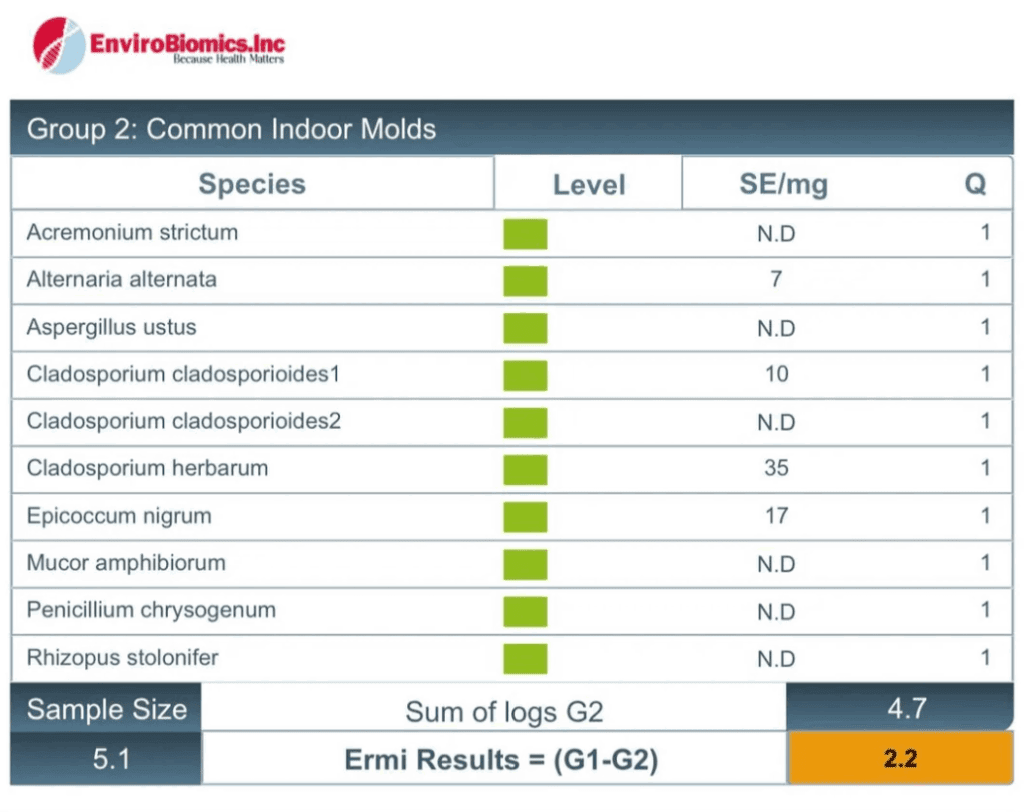
- You may not ever fully recover from mold illness or CIRS if small particle cleaning is not performed WELL. Dr. Ritchie Shoemaker advises that the ERMI score gets to less than a 2 at most for those with CIRS to get better and successfully get their MSH hormone to rise (there is some nuance to this).
- A deep clean never hurt anyone and it may help give you some “mold closure” psychologically speaking.
1. Pre Small Particle Cleaning: Here is checklist on how to handle belongings in your home before the deep clean
It’s not just the home and walls itself that may be coated by mold and biotoxins. Your belongings (like furniture, books, and clothing) can also harbor these. Ideally, the things below are dealt with prior to remediation and small particle cleaning, but wanted to speak to them now as many miss this step in the process.
- Furniture: Upholstered furniture is a common place residual mycotoxins and biotoxins can linger. Best case scenario is to remove all contaminated furniture from the home – either to get rid of especially if mold was growing on it, or the second tier option to remove and deep clean before bringing back inside after remediation as to not contaminate the home. However, I understand this is a best case scenario. Many might not be able to afford to replace all large upholstered furniture. Before deciding to keep furniture or not if financially you are struggling, you can perform a test using EC3 plates to help you decide what to do with upholstered furniture. If mold grows on the plates, you will need to deep clean the furniture and retest or dispose of furniture. Remember: after all that work of remediation, you don’t want these large items reinfecting you and continuing to harm your health after you went to all the work and cost of remediation.
- Mattresses: Remove mattresses and box springs from the home and deep clean if unable to throw away and then bring back into home post remediation (can store at a storage unit or in garage if clean). Some people use ozone, some use compressed air duster, some set the mattress outside in the sunshine. Some will vacuum the mattress. Truth be told, there isn’t a good way to get mycotoxins and biotoxins out of mattresses when deeply imbedded. It’s not like you can throw the mattress is the wash and then the dryer. This is something many people end up replacing and get air mattresses in the meantime.
- Books/Paper: These porous items needs to be removed or contained elsewhere. Store them away from home; many will keep in bins in a storage unit if they are sentimental items and unable to throw away. Throw away all papers that you don’t want/need and keep the sentimental stuff boxed up and can keep in garage or storage unit for now. Another option is to laminate paper that you need to save and Dr. Shoemaker speaks to this being an adequate option. We personally disposed of many books that did not have sentimental value.
- Clothes: All clothing, sheets, bedding, drapes in the home should be washed in hot water using the
- EC3 laundry detergent additive,
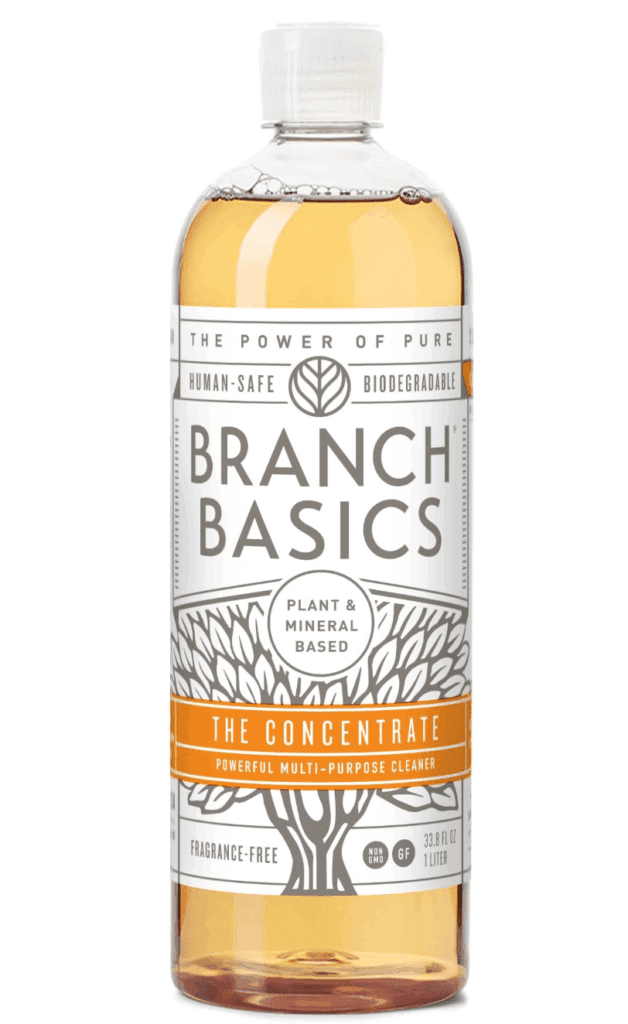
- Branch Basics Detergent,
- PLUS borax.
- They can be dried in the dryer or dried outside in the sunshine on a clothes line. We used EC3 laundry additive – it is truly the best deodorizer in my opinion! I would remove the items from the home and clean elsewhere if possible and then bring back in clean after the small particle clean is finished. If not possible due to cost, just keep washing clothing at the home and wash again one final time in the special additives after the small particle clean.
- Electronics, trinkets and toys: wipe down if you can with disposable microfiber cloths with water and a few drops of branch basics. Some use an air compressor to blow dust out of the electronic if it won’t hurt the electronic.
2. After you have dealt with all the items in your home and have them stored elsewhere ideally (in storage, in tubs in the garage etc.), next you want to ensure the HVAC system and ducts are cleaned to remove any accumulated dust and particles.
This is usually a service that is professionally hired out. It is generally recommended to have this done every 3 to 5 years anyways, but necessary to do after mold remediation BEFORE the small particle clean. Make sure you hiring a NADCA or ACCA certified company to clean your system. Once you have dealt with removing then cleaning the items in your home and had your HVAC system clean and filter changed, it is time to embark on a small particle clean.
***I do want to preface what I am saying in this blog is a realistic, condensed take on the endeavor. If you can afford a CIRS IEP, there advice supersedes any of this general information. There are stricter, more detailed interpretations available on the Surviving Mold website. Also note that small particle cleaning is a professional service that can be performed by a IEP (Indoor Environmental Professional). Around the area I live in, you will commonly see quotes of $20k-$40k depending on many factors like the size of the home. Many people cannot afford the strictest interpretation or for this to be professionally done. I think all things considered it is more important to have the professionals do remediation/removal of the mold/biotoxins and any contracting work. This is much easier to “screw up” whereas small particle cleaning not done “perfectly” usually won’t make the situation much worse off; It’s one of those things that can only “go up from here” – whereas with remediation and contracting work, things can be horribly botched.
3. Small Particle Cleaning: Short & Sweet Principles & Steps to Follow If You Cannot Afford it Professionally Completed
One at a time, room by room do the following:
A. HEPA Vacuuming:
- Ideally while wearing a respirator mask as best option or N95 mask, use a HEPA vacuum with a sealed system to remove large particles, dust, and debris. CIRS IEPs often site the Miele brand ($$$$); I personally used my Dyson, which has amazing suction and has a HEPA filter system.
- Vacuum literally every square inch slowly in an “S” pattern, overlapping each pass to ensure thorough coverage.
- Start with one room at a time and begin by cleaning the highest surfaces first, such as ceilings and ceiling fans, and work your way down to walls, to blinds and then floors.
- Start at the back of the room and move towards the exit to minimize the chance of re-contaminating cleaned areas.
- Vacuum any items that stayed if you were unable to remove them from the home
- After vacuuming one room top to bottom, if it’s a cannister vacuum system, empty the particles OUTSIDE into a trash can. Wipe down cannister with alcohol wipes before going onto next room to vacuum. Change the HEPA filter before small particle cleaning another room.
B. Wet Wiping
- Prepare a solution (1 quart of water, 5 drops of dish soap, 2 TBSP of vinegar) with disposable microfiber cloths OR use premoistened wipes such as EC3 wipes or superstratum wipes.
- Top to bottom, wipe down every square inch of the room in a “s” pattern. Get new microfiber cloth when “dirty” about every 20 square feet or so. Don’t dip dirty microfiber cloth into clean solution.
- If using wipes, use liberally and get new often. The Shoemaker group prefers microfiber cloths with solution. I have seen many people get better with many methods of wet wiping. This is a hot topic as to “which one is best.”
C. Dry Wiping
- Using microfiber cloths, dry wipe the entire room again top to bottom and dispose.You could also get a swiffer mop with dry dust cloths to dry wipe and remove any remaining particles. Dispose of the dust cloths as you go.
Once done with this very laborious process, you can bring back non-contaminated/cleaned items back into the rooms and resituate the rooms.
All done! Post-remediation small particle cleaning is a critical (hopefully) final step in ensuring that your living space is safe and free from the harmful effects of mold contamination and then doing an ERMI/ENDO/ACTINO dust test to check that the levels are now safe.”
4. I would argue the final, final step is periodic evaluation of your home and putting preventative measures in place so that the mold doesn’t ever grow back, or if water damage happens again, you capture it much faster.
Some preventative measures include but are not limited to:
- Sensors underneath sinks that go off if a leak is detected
- Humidity thermometer to monitor humidity in home. Short answer: you want to keep at 50% or less.
- Dehumidifer in your basement that can handle the square footage
- QUALITY Air purifiers (like the Air Doctor – sale linked here) in the bedrooms at a bare minimum and also ideally in living spaces to keep “normal” amounts of biotoxins at bay. Dr. Shoemaker and his team recommend the Air Oasis brand.
- Do a regular, weekly cleaning called an actino cleaning protocol of your home so “normal” levels of biotoxins don’t build up in the dust in your home.
By following a comprehensive small particle cleaning process (more detail process listed here on the Surviving Mold website) after addressing contaminated belongings, you can restore your home to healthy environment for you and your family. The success to your health improving is often in these tiny details.
Need all the dots connected when it comes to navigating toxic indoor mold? Register for Healing from Mold – my online, on demand evidenced based program.
If you are a renter and your landlord refuses to do proper inspection & remediation, click here for more info on steps to take.
*This blog on the Dietetics with Driessens LLC website is maintained by Katie Driessens, Owner. All opinions are her own and for general educational purposes. Advertising, affiliate links or other forms of compensation are within this website and a small commission is earned for sales made through these links (with no extra cost to you) that help cover costs of running a small business. Items or programs that are endorsed are based on Katie’s professional experience and expertise & are worthy of such endorsement. Dietetics with Driessens LLC assumes no responsibility or liability for damage or injury to persons arising from any use of any product, information, or opinion contained in the information of this blog, none of which is to be considered personal medical advice. By viewing, using, and shopping from this website, you agree to release Dietetics with Driessens LLC from full responsibility to the fullest extent allowed by law. Products & Services sold are not intended to diagnose or cure any disease. Consult your physician before beginning any exercise, supplement, meal plan or program. Financial relationships exist with Fullscript, Coseva, Monat Global, Amazon, Ideal Living, The Olive Tree People, Norwex, Ulta Labs, Prodrome, Lifewave, Microbalance Health Products, and Cellcore Biosciences and disclosure meets the ethics guidelines by the Academy of Nutrition & Dietetics and the FTC. Thank you!

