


Hi, I'm Katie
Sharing my functional healthcare expertise as someone who’s worked in both sides (western & holistic). I know when to lean into which side when the other side lacks.
WANT to WORK TOGETHER?
right this way
HVAC Air Filters Explained: MERV Ratings, Mold Protection, Replacement Schedules, and the Best Brands Compared
Indoor air quality has become one of the biggest concerns for homeowners, especially for families dealing with allergies, asthma, pets, or moisture issues that can contribute to mold growth. While your HVAC system is designed to heat and cool your home, it also plays an important role in filtering the air you breathe.
Choosing the right air filter isn’t just about buying the most expensive option. Understanding MERV ratings, knowing how filters perform against mold spores, and selecting a quality brand can help improve your home’s air quality while protecting your HVAC equipment.
What Is a MERV Rating?
MERV stands for Minimum Efficiency Reporting Value, the industry standard developed by ASHRAE to measure how effectively an HVAC filter captures airborne particles between 0.3 and 10 microns. The higher the MERV rating, the smaller the particles the filter can capture.
Understanding MERV Ratings
| MERV Rating | Captures | Best For |
|---|---|---|
| 1-4 | Large dust, lint | Basic equipment protection |
| 5-8 | Dust, pollen, pet dander | Standard residential homes |
| 9-12 | Fine dust, mold spores, allergens | Homes with pets or allergy sufferers |
| 13-16 | Bacteria, smoke particles, very fine allergens | High indoor air quality needs (if HVAC system supports it) |
The U.S. Environmental Protection Agency recommends using MERV 13 or higher when your HVAC system can accommodate it, as these filters capture significantly more fine particles. Always verify that your HVAC equipment is designed to handle higher-efficiency filters, since filters with higher MERV ratings can reduce airflow in systems not designed for them.
Can HVAC Filters Stop Mold Spores?
Yes—but not all filters are equally effective.
Most mold spores measure between 3 and 40 microns, making them large enough for quality pleated filters to capture. (Note, these filters don’t replace remediation in a water damaged home but rather handle “normal” amounts.)
Here’s how different MERV ratings perform:
- MERV 8: Captures many larger mold spores but allows smaller particles to pass.
- MERV 11: Provides noticeably better mold spore filtration.
- MERV 13-14: Excellent protection against mold spores, pollen, smoke, and many airborne bacteria.
- HEPA Filters: Capture 99.97% of particles as small as 0.3 microns but are generally used in portable air purifiers rather than standard residential HVAC systems because most home HVAC equipment is not designed for HEPA-level airflow resistance.
It’s important to remember that air filters capture airborne mold spores—they do not eliminate mold growing inside your home. If mold is already growing due to water damage or excess humidity, the moisture issue must be addressed.
How Often Should You Change Your HVAC Filter?
Filter replacement depends on your home’s conditions, filter thickness, and indoor air quality.
| Filter Type | Recommended Replacement |
|---|---|
| Fiberglass | Every 30 days |
| Pleated MERV 8 | Every 60-90 days |
| MERV 11-13 | Every 60 days |
| Homes with pets | Every 30-60 days |
| Allergy sufferers | Every 30-45 days |
If you notice increased dust, reduced airflow, higher energy bills, or worsening allergy symptoms, it’s probably time for a new filter regardless of the schedule.
Comparing Three Popular HVAC Filter Brands
1. Filtrete (3M)
Best For: Most homeowners
Popular MERV Ratings: 8, 11, 12, 13
Pros
- Widely available
- Excellent balance of airflow and filtration
- Affordable replacement costs
- Strong reputation for allergen control
Cons
- Higher MERV models can restrict airflow if the HVAC system isn’t designed for them.
- Premium versions cost more than standard filters.
Mold Protection: Very good with MERV 11 and MERV 13 models.
Replacement: Every 60-90 days.
Overall Rating: ★★★★★
2. Honeywell Home
Best For: Long-term HVAC system protection
Popular MERV Ratings: 8-13
Pros
- Durable construction
- Consistent airflow
- Trusted HVAC brand
- Available in multiple thicknesses
Cons
- Slightly fewer size options in some retail stores
- Premium models can be more expensive
Mold Protection: Excellent in MERV 11 and MERV 13 filters.
Replacement: Every 60-90 days.
Overall Rating: ★★★★☆
3. AirDoctor HVAC Filter
Unlike traditional filter brands, AirDoctor offers both MERV 14 HVAC filters and standalone HEPA air purifiers, allowing homeowners to improve whole-home filtration while also cleaning the air in specific rooms.
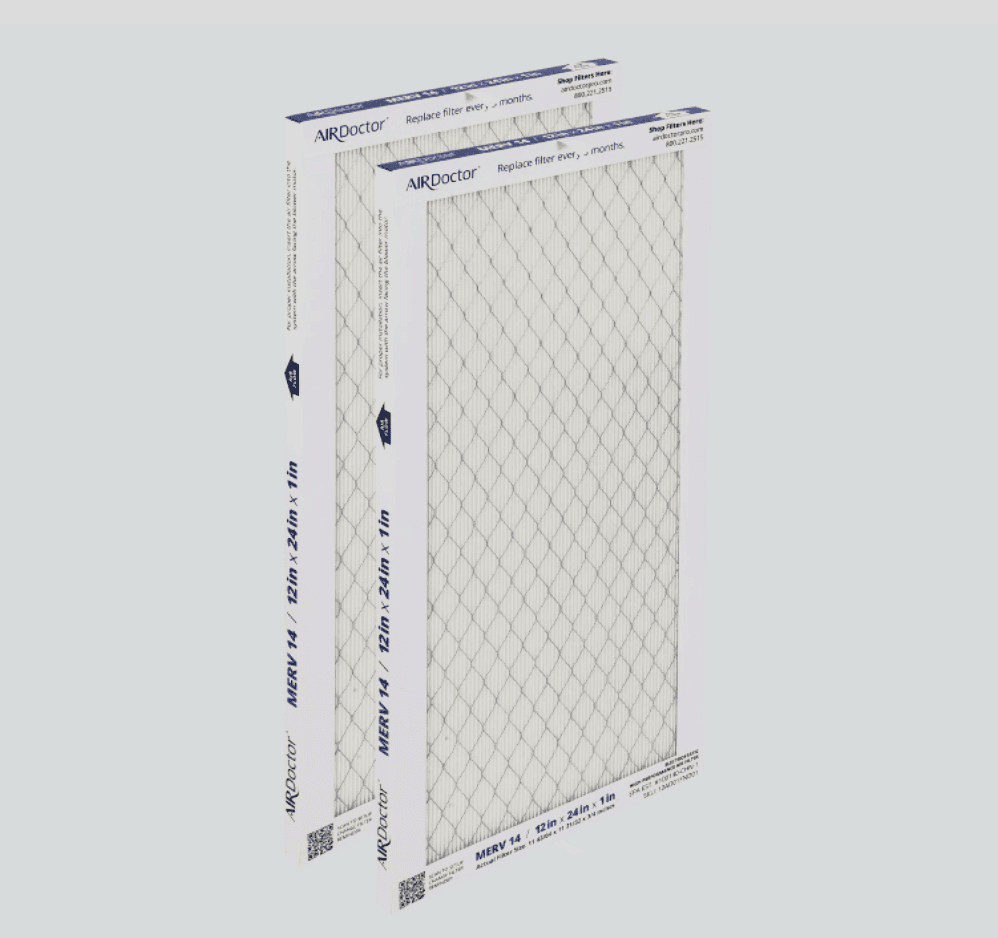
Their MERV 14 HVAC filter is designed to capture fine particles including pollen, dust mites, pet dander, mold spores, smoke, and other airborne contaminants. AirDoctor recommends replacing these filters every 60 to 90 days.
The AirDoctor Air Purifier uses a true UltraHEPA filtration system, which goes beyond standard HVAC filtration. Because portable air purifiers continuously recirculate room air, they can capture particles that may not pass through your HVAC system frequently enough to be trapped by the furnace filter. This makes them an excellent supplement—especially in bedrooms, nurseries, or homes with allergy sufferers.
Pros
- MERV 14 whole-home HVAC filter
- UltraHEPA portable purifier captures ultrafine particles
- Excellent for allergy and asthma sufferers
- Third-party tested filtration performance
Cons
- Higher initial investment
- Portable purifier covers individual rooms rather than the entire home
- Replacement filters cost more than standard HVAC filters
Mold Protection: Excellent. The HVAC filter captures airborne mold spores, while the air purifier continuously removes fine airborne particles within occupied rooms.
Replacement Schedule
- HVAC filter: Every 60-90 days
- Air purifier filter: Follow the manufacturer’s indicator or maintenance schedule
Overall Rating: ★★★★★
HVAC Filter vs. Air Purifier: Do You Need Both?
Many homeowners assume an HVAC filter alone is enough, but these products serve different purposes.
An HVAC filter primarily protects your heating and cooling equipment while improving whole-home air quality whenever the system is running.
A portable air purifier continuously filters the air in a specific room, making it especially effective for removing allergens, pet dander, smoke, and ultrafine particles.
For households with allergies, asthma, pets, or concerns about mold spores, using a quality MERV 11-14 HVAC filter together with a HEPA or UltraHEPA air purifier often provides the best overall indoor air quality.
Final Thoughts
The best HVAC filter depends on your home’s needs, your HVAC system’s capabilities, and your indoor air quality goals.
For most households:
- MERV 8 is a good choice for everyday filtration.
- MERV 11-13 offers an excellent balance of airflow and allergen protection.
- MERV 14 is a premium option for enhanced indoor air quality when your HVAC system supports it.
If you’re particularly concerned about mold spores, allergies, or airborne contaminants, pairing a high-quality HVAC filter with a room air purifier—such as an AirDoctor unit—can significantly improve the air your family breathes.
Before upgrading to a higher MERV filter, consult an HVAC professional to ensure your system can maintain proper airflow. The right filter not only improves indoor air quality but also helps keep your HVAC system operating efficiently for years to come.
*This blog on the Dietetics with Driessens LLC website is maintained by Katie Driessens, Owner. All opinions are her own and for general educational purposes and not a replacement for individualized medical advice. Advertising, affiliate links or other forms of compensation are within this website and a small commission is earned for sales made through these links (with no extra cost to you) that help cover costs of running a small business. Products and services listed are prior carefully created and/or evaluated to ensure that they are accurate and supported by scientific evidence. Items or programs that are endorsed are based on Katie’s professional experience and expertise & are worthy of such endorsement. Dietetics with Driessens LLC assumes no responsibility or liability for damage or injury to persons arising from any use of any product, information, or opinion contained in the information of this blog, none of which is to be considered personal medical advice. By viewing, using, and shopping from this website, you agree to release Dietetics with Driessens LLC from full responsibility to the fullest extent allowed by law. Products & Services sold are not intended to diagnose or cure any disease. Consult your physician before beginning any exercise, supplement, meal plan or program. Thank you!
1:1 Care
about
blog
home
podcast
programs
supply closet

Want to learn more on the daily?
Join My Email List
Latest blog posts, juicy new podcast episodes, weekly deals, and fresh recipe ideas straight to your inbox.
Follow me on Instagram for daily tips and tricks for overall health and wellness advice.
